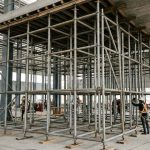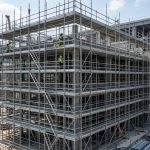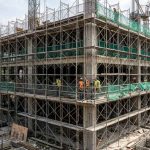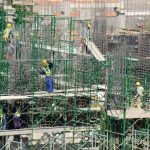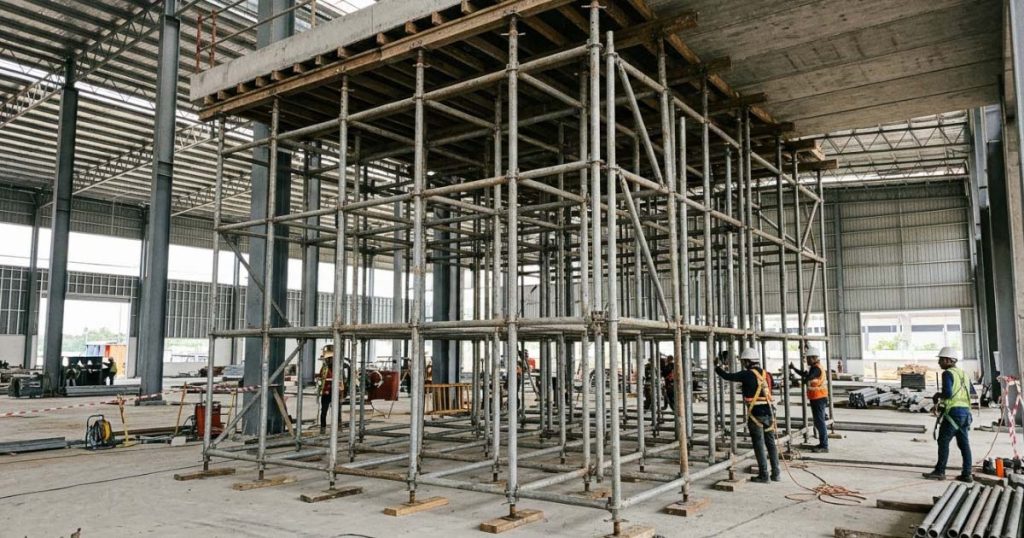
See how the C60 shoring system supports factory slab construction across Johor’s JS-SEZ corridor, and what to look for in a shoring supplier.
Key Takeaways:
- Ground-bearing factory floors usually do not need shoring, but suspended slabs such as upper floors, mezzanines and raised platforms do.
- Shoring on industrial slabs carries wet concrete, formwork, workers and equipment, and the exact requirements must come from the structural engineer’s design.
- The C60 shoring system uses high-strength steel tubes with a locking connection and quick assembly, which suits factory buildings with repeated bays.
- Before specifying shoring, check the engineer’s design, the bearing below, CIDB compliance certification, component condition and the striking sequence.
- Power Metal & Steel supplies the C60 shoring system, frame scaffolding and tubular scaffolding in Johor, with rental, purchase and Johor-area erection and dismantling support.
Introduction
Drive through Senai, Kulai or Iskandar Puteri today and the pattern is hard to miss. New factories, warehouses and logistics buildings are going up on land that was open ground not long ago. Much of this activity sits within the Johor-Singapore Special Economic Zone (JS-SEZ), which covers nine flagship zones including Iskandar Puteri, Senai-Skudai and Kulai-Sedenak. Manufacturing and logistics are among its priority sectors.
For suspended concrete slabs in these buildings, one temporary works option contractors can turn to is a C60 shoring system. This post covers where shoring is needed, what it carries and what to check before specifying it.
Does Every Factory Floor Slab Need Shoring?
Not always, and it is worth being clear about this. A ground-bearing slab, cast directly on prepared ground, typically does not need shoring. Shoring comes into play for suspended slabs, such as upper floors in multi-storey factories, mezzanine levels, raised loading platforms and roof slabs over large halls. Until the concrete gains enough strength, nothing but temporary support stands between that slab and the floor below, so the shoring has to carry the load safely.
What Load Does Shoring Carry on an Industrial Slab?
More than the wet concrete alone. Industrial floors are often designed for machinery, racking and forklift traffic, so their slabs can be heavier than those in ordinary buildings. Thicker slabs or heavier reinforcement, where the design calls for them, add to the weight the shoring must hold during construction. On top of this, the shoring carries formwork, workers, equipment and the added effect of pouring or pumping. Across a wide factory floor plate, the total is a heavy and sustained load.
The actual figures come from the structural engineer’s design for each slab. Contractors should confirm load, layout and height requirements before ordering equipment, rather than estimating on site.
How Does the C60 Shoring System Handle Span and Height?
Our C60 shoring system is built from 60 mm high-strength steel tubes with an anti-rust coating. The tubes connect through a locking mechanism, so no separate couplers are needed, and the system is designed for heavy-duty loads such as large concrete structures. Its modular design also allows quick assembly and disassembly. That repeatable approach suits factory construction, where the same bay is often repeated across a large floor area.
Shoring is built up to the underside of the slab being cast, and the layout, height and bracing should follow the engineer’s design. Because a modular system goes up and comes down quickly, equipment from a completed bay can often be moved to the next one, which helps keep it working across the pour programme. Where slab formwork is part of the job, our formwork accessories can be supplied alongside.
What Should You Check Before Specifying Shoring for an Industrial Slab?
A few checks help avoid problems later:
- Engineer-confirmed design. Loads, layout, tower height and bracing should come from the design, not from habit or guesswork.
- Firm bearing below. Shoring passes its load downward, so the ground or lower slab beneath it must be sound, level and checked before erection.
- CIDB compliance. Ask the supplier for valid CIDB standard compliance certification for the scaffolding and shoring equipment.
- Component condition. Look for bent tubes, heavy corrosion or damaged connection points, especially on equipment that has been reused several times.
- Striking sequence. The engineer should confirm when and in what order shoring can be released. A fixed number of days should never be assumed.
For wider site safety fundamentals, our guide to building scaffolding stability and safety is a useful companion read.
Who Supplies Scaffolding and Shoring for Industrial and Commercial Buildings in Johor?
Power Metal & Steel supplies scaffolding and steel products to contractors working on construction, engineering and industrial projects. As a scaffolding supplier in Johor Bahru, we provide new and reconditioned equipment for rental or purchase, including frame scaffolding, tubular scaffolding and the C60 shoring system. That means one supplier can cover access scaffolding for the building envelope and heavy-duty shoring for the slabs.
What Should You Look for in a Shoring Supplier for Factory Projects?
The right supplier makes a tight programme easier to manage. For factory and industrial slab work, these points matter most:
- Equipment that carries valid CIDB standard compliance certification.
- The right system and quantity, available when the pour programme needs it.
- Flexible options, such as scaffolding rental for a single project or purchase for ongoing needs.
- Advice before mobilisation, so the equipment matches the design.
- Erection and dismantling support from trained scaffolders where required.
Here is how Power Metal & Steel lines up. We offer new and reconditioned stock, rental and purchase, and buy-back or trade-in of used scaffolding. Our team provides free construction consultation to help match equipment to your project. For projects in the Johor area, our dismantle and erection service is carried out by trained scaffolders, so equipment and installation can come from one source.
Planning a factory or industrial slab in Johor? Contact our team with your site location, slab details and pour programme. We offer timely delivery and setup support in our service areas, which include Johor Bahru, and will advise on suitable C60 shoring for your project.
FAQs
Shoring carries the weight of a slab or structure while it is being built, whereas scaffolding mainly gives workers safe access at height. Power Metal & Steel supplies both, including frame scaffolding for access and the C60 shoring system for heavy-duty support.
It is not limited to factories. The C60 shoring system is designed for heavy-duty loads, and its product page lists multi-storey developments and commercial building projects among its applications. The right setup for any building still depends on the structural engineer’s design.
Yes, we offer delivery and setup support within our service areas, which include Johor Bahru. Fees and lead times depend on the project, so we confirm them in your quotation. Sharing your site address, equipment list and required date helps us arrange delivery.
Prepare the site location, slab area and thickness, floor-to-floor heights, the engineer’s drawings and the pour programme. Also state whether you need rental or purchase, and for how long. We offer free construction consultation to help match equipment to your project.
It can, provided it passes inspection and meets the project’s requirements. We supply new and reconditioned equipment, such as tubular scaffolding, and offer buy-back or trade-in of used scaffolding. Always confirm its condition and valid CIDB compliance certification before use on site.