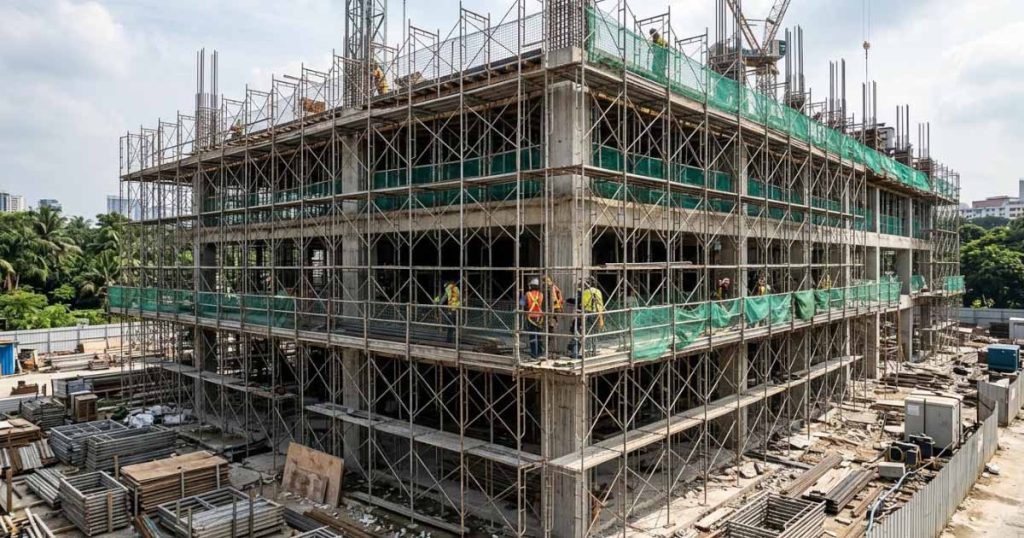
Metal frame staging remains a practical choice for staging construction in Malaysia. See the benefits, from speed to reusability to CIDB compliance.
Key Takeaways:
- Metal frame staging provides reliable load-bearing capacity for multi-level construction platforms, supporting workers, materials, and tools at height.
- Its straightforward assembly makes it well suited to time-pressured commercial builds where schedules leave little room for delay.
- Reusability across multiple project phases helps reduce overall staging costs compared to single-use or custom-built alternatives.
- Metal frame staging used in Malaysia should carry CIDB standard compliance certification, giving contractors confidence that the equipment meets required standards.
- Its modular design allows the same components to be configured for both standard building footprints and more irregular site layouts.
Introduction
Walk past almost any active construction site in Malaysia, whether a shophouse renovation in Johor Bahru or a commercial build in Kuala Lumpur, and you will likely see the same familiar structure rising alongside it. Metal frame staging remains one of the most consistently used forms of temporary construction platform in the country, and it has held that position for good reason.
For contractors weighing their options for staging construction on an upcoming project, understanding what makes this system so widely used helps put the decision in context.
What Makes Metal Frame Staging Suitable for Multi-Level Platforms?
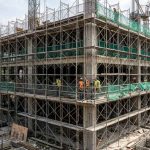
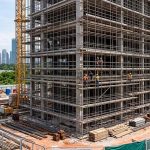
Metal frame staging is built from prefabricated steel sections that connect vertically and horizontally to form a stable, load-bearing structure. This design allows it to support workers, tools, and materials safely at multiple levels as a building rises floor by floor.
The strength of the system comes from how the frames interlock with cross braces and connecting pins, distributing weight evenly across the structure rather than concentrating it at a single point. This makes it a practical choice for construction platforms that need to carry sustained loads over the course of a project, rather than just brief, light-duty access.
For contractors working on buildings with several storeys, this load-bearing reliability is often the deciding factor in choosing metal frame staging over lighter or less structurally rated alternatives.
Why Does Assembly Speed Matter on Time-Pressured Builds?
Commercial construction projects in Malaysia often run on tight schedules, and every day spent setting up temporary works is a day not spent on the actual build. This is where metal frame staging offers a genuine practical advantage.
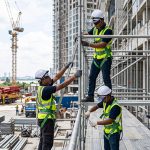
Because the components are prefabricated and designed to connect through a consistent pin and brace system, scaffolders can erect and dismantle it efficiently without needing extensive on-site adjustment. This predictability matters most on projects where the staging needs to move progressively up a building as work advances, since delays at each level compound across the entire project timeline.
For contractors managing several trades working simultaneously, having staging that goes up quickly and reliably reduces one of the more common sources of schedule slippage on a busy site.
How Does Reusability Reduce Staging Costs Over Time?
One of the most practical financial benefits of metal frame staging is that it is not a single-use investment. The same components can be dismantled at the end of one project phase and reassembled for the next, whether that is a different level of the same building or an entirely separate project.
This reusability matters more than it might first appear. A contractor who owns or rents staging equipment is not paying for something that gets discarded after one use. Instead, the cost of the equipment is effectively spread across every project it supports over its working life, provided it is properly maintained and inspected between uses.
For contractors managing multiple projects across a given period, this reduces the overall cost burden of staging compared to arrangements that require custom fabrication or single-use setups for each new site.
Why Does CIDB Compliance Matter When Choosing Staging Equipment?
Compliance is not an optional consideration when it comes to construction platforms in Malaysia. Scaffolding and staging materials fall under CIDB’s regulated product requirements, which means relevant components should carry proper standard compliance certification confirming they meet the MS 1462 series of standards.
For contractors, this compliance requirement offers a practical benefit beyond simply meeting a regulatory obligation. Equipment that has gone through proper certification and inspection processes gives project teams greater confidence in its structural reliability, which matters considerably when staging is supporting workers at height over an extended period.
Before committing to any staging equipment, confirming that it carries valid CIDB compliance documentation is a straightforward step that protects both the project and the people working on it.
Can Metal Frame Staging Adapt to Irregular Building Footprints?
While metal frame staging is often associated with standard, regular building shapes, its modular nature also gives it a reasonable degree of adaptability for more irregular sites.
Components can be configured in different combinations to work around variations in floor plate shape, uneven ground levels, or site constraints that a completely rigid or custom structure would struggle to accommodate. This does not make metal frame staging as flexible as tubular systems for highly complex geometries, but for most standard to moderately irregular construction footprints, it offers a workable balance between structural reliability and configuration flexibility.
This adaptability is part of why the system remains a default choice across such a wide range of project types in Malaysia, from straightforward commercial builds to renovation work on older, less uniformly shaped properties.
Power Metal & Steel: Metal Frame Staging Supply Across Malaysia
At Power Metal & Steel, we supply metal frame staging and scaffolding to contractors working on construction projects across Johor Bahru, Penang, Kuala Lumpur, and other areas in Malaysia. Our inventory includes both new and reconditioned stock, giving contractors options suited to different project scales and budgets.
Whether you are planning staging for a straightforward commercial build or a site with more irregular conditions, our team can help you work out the right configuration before mobilisation begins.
Get in touch with us to discuss your staging construction requirements.
FAQs
The safe height for metal frame staging depends on the specific product specifications, ground conditions, and load requirements of each project, so this should always be confirmed with the supplier or a qualified engineer before mobilisation. Exceeding a system’s rated height or load capacity without proper assessment increases the risk of instability.
Staging should be inspected regularly throughout a project, particularly after severe weather, any modification to the structure, or extended periods of continuous use. Establishing a routine inspection schedule, rather than relying on one-off checks, helps catch issues such as loose connections or component wear before they become safety concerns.
For most straightforward commercial builds with regular floor plates, metal frame staging is generally more cost-effective and faster to assemble than tubular scaffolding. Tubular systems tend to be reserved for sites with irregular geometry or industrial complexity, as explained in our comparison of frame, system, and tubular scaffolding.
Mixing components from different suppliers is generally not recommended, since connection points, dimensions, and load ratings can vary between manufacturers even when the systems look similar. Using unmatched components increases the risk of a joint failing to seat correctly, which compromises the overall stability of the staging.
Yes, this is one of the practical advantages of metal frame staging, as the same components can generally be redeployed across different project types, from commercial builds to renovation work, provided they are inspected and remain in good condition. This reusability is part of what makes the system cost-effective over its working life.