The Johor-Singapore Special Economic Zone is transforming Johor into a construction hotspot. Discover how RM18 billion in investment is creating unprecedented staging construction demand across industrial, logistics, and infrastructure projects.
Key Takeaways
✨ Investment Surge: Over RM18 billion in foreign direct investment has flowed into JS-SEZ since 2024, with major projects from Microsoft, Equinix, and multinational logistics operators.
✨ Industrial Expansion: Hundreds of thousands of square meters of new warehouse and factory space are under construction across Pasir Gudang, Iskandar Puteri, and Tanjung Pelepas.
✨ Infrastructure Build-Out: The RTS Link passenger rail, port expansions, and logistics corridors are creating massive temporary access requirements for construction crews.
✨ Time Pressure: Projects are moving faster than traditional construction timelines – developers using industrialized building systems are completing buildings 40% quicker, demanding staging that keeps pace.
✨ Geographic Concentration: Nine flagship zones spanning 3,500 square kilometers mean contractors are managing multiple simultaneous projects within tight geographic clusters.
Introduction
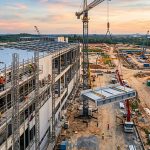
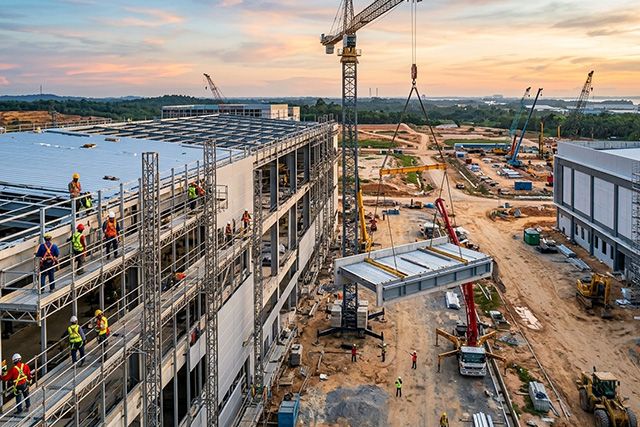
Construction sites are everywhere now. Drive along any major corridor in Johor Bahru, Pasir Gudang, Iskandar Puteri, Gelang Patah and you will see them. Not the sleepy industrial zones of five years ago, these are active job sites. Cranes lifting prefabricated building sections, workers accessing elevated facades, logistics hubs rising from cleared land at speeds that would have seemed impossible before 2026.
This is what RM18 billion in cross-border investment looks like on the ground.
The Johor-Singapore Special Economic Zone, formalized in January 2025, has become the most significant economic development driver in southern Peninsular Malaysia. More than 3,500 square kilometers designated for coordinated industrial growth between two countries. Nine flagship zones, eleven priority sectors. Tax incentives running through 2034. One-stop approval centers cutting permit timelines in half.
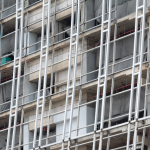
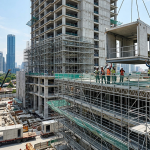
For construction contractors and project managers, the effect has been immediate and sustained. Staging construction demand, the temporary access structures that allow crews to work safely at height has surged alongside the building boom. Every new warehouse needs access for curtain wall installation, every data center requires platforms for cooling equipment mounting, every logistics facility demands staging during roof work and facade completion.
The question contractors face is not whether scaffolding and staging will be needed. The question is how to manage the sheer volume and speed these projects demand.
The Numbers Tell One Story
Malaysia’s construction sector is valued at USD 41.2 billion in 2026, tracking a steady 8.66% annual growth rate. Johor’s contribution is accelerating rapidly under the momentum of the Johor-Singapore Special Economic Zone (JS-SEZ). The state’s primary economic engine, Iskandar Malaysia, recorded RM 41.4 billion in committed investments for 2024, marking an 11% increase from the previous year.
The logistics and industrial sectors are seeing unprecedented demand. Logistics leaders like DHL and Kuehne+Nagel have secured roughly 500,000 square meters of warehouse space slated for 2027 delivery. Concurrently, Microsoft, Equinix, and Princeton Digital Group have committed billions of dollars toward hyperscale data centers in the region.
Industrial property transactions are moving at a high velocity. UEM Sunrise’s Gerbang Nusajaya successfully pre-leased 60% of its phase-one industrial plots before construction even began. Furthermore, Tiong Nam Logistics has completed its 1.1 million square foot mega-warehouse in Senai, purpose-built for Mercedes-Benz. These are not speculative developments; they are fully occupied, high-utility facilities with locked-in tenants driving urgent delivery schedules.
Connectivity upgrades are reaching their final stages. The Rapid Transit System (RTS) Link, which will connect Johor Bahru’s Bukit Chagar station to Singapore’s Woodlands in just six minutes, has entered its final construction phase targeting a December 2026 completion. The Port of Tanjung Pelepas (PTP) is expanding its capacity toward 15 million TEUs following record-breaking volumes in 2025. Efficiency at the border has also been modernized: passport-free QR clearance systems are now live at crossings, and the Single Transshipment Permit has replaced the old dual-permit system, cutting processing times and costs by half.
Every infrastructure upgrade is fueling construction activity, and every construction project is, in turn, generating a critical need for staging and long-term scaffolding support.
The Reality on Site Looks Different
Numbers capture scale. They do not capture the operational challenge contractors face managing multiple active sites across flagship zones while meeting accelerated timelines. Here is what actually happens.
A multinational manufacturer signs a lease for built-to-suit factory space in Pasir Gudang. The developer commits to 18-month delivery using industrialized building systems instead of the traditional 30-month timeline. Prefabricated building modules arrive from off-site production on tight schedules. Installation crews need elevated access to position structural components, seal connections, and install cladding systems.
Traditional tube-and-coupler scaffolding would take days to erect and adjust for each building section. The installation schedule does not have days but only hours. When modules arrive, staging goes up and sections connect, staging reconfigures then next modules arrive.
The same pressure applies to logistics facilities. A 200,000 square meter warehouse under construction in Tanjung Pelepas serves as a regional distribution hub. Curtain wall contractors need continuous access around the entire perimeter. Roofing crews require platforms spanning massive clear heights. HVAC installers demand stable working surfaces for ductwork installation in ceiling zones reaching 12 meters or more.
If staging installation becomes the bottleneck, the entire project schedule suffers. Developers pay liquidated damages, tenants delay operations, construction managers face pressure from multiple directions. This is why staging rental has become critical infrastructure for JS-SEZ construction activity.
Nine Flagship Zones Mean Nine Simultaneous Markets
The JS-SEZ is not one development, it is nine designated zones, each with sector-specific focus areas creating distinct staging demand profiles.
Iskandar Puteri concentrates on global business services, digital economy operations, and mixed-use commercial development. Projects here involve office towers, data center campuses, and retail complexes. Staging requirements lean toward high-rise access systems supporting glass facade installation and architectural finishing work.
Pasir Gudang and Tanjung Pelepas anchor logistics and manufacturing activity, massive warehouse footprints, heavy industrial facilities, and port infrastructure expansion. Staging here supports large-span roof construction, loading dock canopy installation, and exterior maintenance access for buildings designed around functional efficiency rather than architectural complexity.
Senai focuses on aerospace and advanced manufacturing. Precision assembly facilities, clean-room construction, specialized environmental controls during building closeout. Staging must accommodate contamination protocols while still providing the access these projects require.
Forest City positions as a special financial zone with residential, hospitality, and financial services infrastructure. Mid-rise residential towers, hotel construction, and mixed-use podiums. Staging demand here mirrors urban construction patterns but at compressed timelines driven by integrated master planning.
Contractors working across multiple zones cannot use identical staging approaches. Project types differ and access requirements vary. Timelines compress or extend based on building complexity and tenant move-in dates.
The firms managing this complexity successfully are the ones treating staging as a strategic resource, not a commodity line item.
The Industrialized Building System Factor
Malaysia’s construction sector is shifting hard toward industrialized building systems. The government set a 70% IBS penetration target for public projects. Private developers adopted the same methods because speed became the primary competitive advantage.
IBS construction changes how buildings go up. Factory-produced components replace on-site fabrication. Structural sections arrive with connections pre-engineered. Assembly happens in hours instead of weeks. Projects that previously took 30 months now deliver in 18 months.
For staging contractors, this creates both opportunity and challenge.
The opportunity: More projects happening faster means higher utilization rates for staging inventory. The rental cycles shorten but volume increases. A staging system serving one project for six months might now serve three projects across two months each, generating better return on equipment investment.
The challenge: Installation and reconfiguration speed becomes the differentiating factor. Modular staging systems that assemble quickly match IBS construction timelines. Traditional tube-and-coupler approaches that require skilled labor and extended setup periods create schedule friction.
Developers building IBS projects expect their staging contractors to operate at the same pace. If prefabricated modules are installed in a day, the staging supporting that work needs to go up in hours, not days.
What This Means for Contractors and Project Managers
If you are managing construction projects in Johor’s JS-SEZ corridor in 2026, staging availability and deployment speed directly impact your ability to hit milestones.
The market has tightened, with more projects competing for the same staging rental inventory. Lead times extend as demand outpaces supply. Contractors who previously booked staging systems weeks in advance now find themselves planning months ahead or facing availability gaps during critical construction phases.
The projects moving fastest are the ones that integrated staging logistics into their construction planning early. Not as an afterthought once concrete work finishes. As a core component of the project schedule from day one.
This requires asking different questions during project planning:
What is the staging requirement for each construction phase, not just total project need? When do installation crews or scaffolders need access, and when can staging demobilize to serve other projects? Can staging systems reconfigure to support multiple trades accessing different building zones simultaneously? How does staging availability align with prefabricated component delivery schedules?
For projects using IBS methods, these questions become even more critical. The entire construction logic depends on maintaining momentum. Staging cannot become the constraint.
Power Metal & Steel Serves the JS-SEZ Construction Corridor
Power Metal & Steel provides staging rental services across Johor Bahru, Pasir Gudang, and the broader JS-SEZ flagship zones. Our inventory supports the industrial, logistics, and infrastructure projects transforming southern Johor in 2026.
We understand what JS-SEZ projects demand. Fast deployment timelines matching IBS construction speeds. Flexible configurations adapting to warehouse clear heights, factory access requirements, and data center security protocols. Reliable availability when your project schedule needs it, not when supply happens to align.
Our team works directly with contractors managing multiple active sites across flagship zones. We coordinate staging logistics so your crews have access when modules arrive, not days later. We handle dismantle and erection, so your project managers focus on building delivery, not staging complexity.
If you are managing construction projects in the JS-SEZ corridor, staging availability is not just about having equipment. It is about having staging systems that match the pace your projects move at.
Contact Power Metal & Steel for staging construction rental in Johor Bahru and the JS-SEZ flagship zones. We provide staging solutions for industrial facilities, logistics hubs, and infrastructure projects across Malaysia.
FAQs
The JS-SEZ is a cross-border economic zone established in January 2025 between Malaysia and Singapore, spanning over 3,500 square kilometers across nine flagship areas in southern Johor. The zone offers tax incentives, streamlined customs procedures, and enhanced connectivity to attract manufacturing, logistics, data centers, and other high-value industries. It aims to create complementary operations between Johor’s cost-competitive resources and Singapore’s global business hub capabilities.
Staging construction refers to temporary elevated platforms and access systems that allow construction crews to work safely at height during building projects. These systems provide access for tasks like installing exterior walls, roofing, facade work, and building maintenance. In industrial projects, staging supports activities ranging from warehouse curtain wall installation to data center equipment mounting and logistics facility roof construction.
Contractors should plan staging requirements at least two to three months in advance for projects in Johor Bahru due to increased demand across the JS-SEZ’s flagship zones in 2026. For large-scale projects requiring significant staging inventory or for peak construction periods, booking three to four months ahead is advisable. Projects using industrialized building systems with tight installation schedules may benefit from securing staging commitments during the design phase to ensure availability aligns with prefabricated component delivery dates.
Industrialized Building System (IBS) construction compresses project timelines from 30 months to approximately 18 months, which means staging must deploy and reconfigure much faster than traditional projects. IBS projects using prefabricated modules need staging that can be erected in hours rather than days to match the rapid pace of module installation. The staging systems must also be highly flexible to support different trades working simultaneously on various building sections as prefabricated components arrive on tight schedules.
Yes, staging systems can be relocated between project sites, and this is common practice given the geographic concentration of the nine flagship zones within southern Johor. Modular staging systems are specifically designed for quick installation and dismantling, allowing them to serve multiple projects in sequence. However, contractors should coordinate with their staging provider to schedule demobilization and remobilization to avoid gaps in availability, especially during peak construction periods when demand is high across multiple zones.