From construction to agriculture, discover how 5 Malaysian industries depend on hollow section steel suppliers for structural strength and cost efficiency.
Key Takeaways
✨ Construction Dominates: High-rise buildings and infrastructure projects in Malaysia use hollow sections for columns, beams, and structural frames due to superior strength-to-weight ratio.
✨ Agriculture Adopts Steel: Greenhouse farming across Malaysia relies on galvanized hollow section frames that withstand tropical humidity and provide long-term durability.
✨ Oil & Gas Demands Strength: Offshore platforms and refineries require heavy-duty hollow sections that resist corrosion in marine environments.
✨ Signage Needs Structure: Outdoor advertising billboards and LED structures use hollow section steel for wind-resistant frameworks that meet DOSH safety standards.
✨ Warehousing Requires Reliability: Industrial racking systems built from hollow sections support heavy loads while maximizing vertical storage space.
Introduction
Walk into any construction site, warehouse, or agricultural facility in Malaysia and you will see hollow section steel somewhere. These rectangular or square steel tubes provide structural support across industries.
Hollow sections offer something solid steel cannot match. The hollow interior reduces weight without sacrificing strength. This makes them ideal for applications where both durability and efficiency matter.
In 2026, Malaysia’s industrial growth is driving demand for hollow section suppliers. From Johor Bahru to Penang, businesses need reliable steel products that meet local standards and withstand Malaysia’s tropical climate.
This guide examines five industries that depend on hollow section steel and explains why these sectors choose this material over alternatives.
What Makes Hollow Section Steel Different from Other Steel Products?
Hollow section steel provides superior strength-to-weight ratio compared to solid steel bars or I-beams. The tubular design distributes load evenly across the structure while using less material.
Traditional solid steel requires more weight to achieve the same load-bearing capacity. A hollow section beam weighs 30-40% less than a solid steel beam with equivalent strength. This weight difference reduces transportation costs and foundation requirements.
The hollow design also resists torsion better than solid sections. When forces twist the structure, hollow sections maintain their shape more effectively. This matters for tall buildings, advertising structures, and industrial equipment exposed to wind loads.
Hollow sections come in square, rectangular, and circular shapes. Each shape suits different applications. Square and rectangular sections work well for frames and columns. Circular hollow sections excel in applications requiring uniform strength in all directions.
How Does the Construction Industry Use Hollow Section Steel?
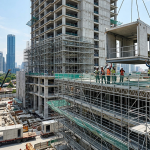
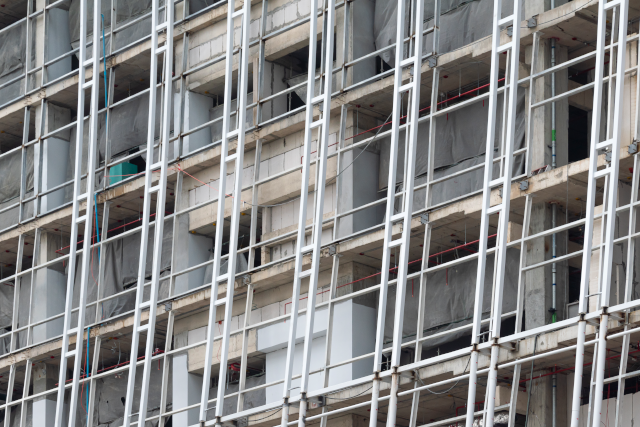
Malaysia’s construction sector consumed approximately 13.5 million tonnes of steel in 2025, with hollow sections representing a significant portion for structural applications. High-rise buildings, commercial developments, and infrastructure projects all rely on hollow section steel.
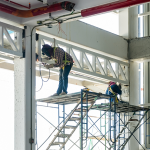
Building columns and beams use rectangular hollow sections because they provide clean lines and easy connection points. Unlike I-beams that require complex welding, hollow sections accept simple end-plate connections. This speeds up construction and reduces labor costs.
The modular nature of hollow sections suits prefabricated construction methods. Contractors can fabricate building frames off-site, then transport and assemble components quickly. This matches the 70% IBS penetration target for Malaysian public projects.
Hollow sections also work well in building facades and architectural features. The clean exterior surface requires minimal finishing. Architects appreciate the modern aesthetic hollow sections provided for commercial buildings and mixed-use developments.
For construction projects, hollow section suppliers must provide material certified to MS 1462 or equivalent standards. Power Metal & Steel supplies hollow sections meeting Malaysian construction requirements for projects across Johor Bahru, Kuala Lumpur, and Penang.
Why Is the Agriculture Sector Turning to Steel Hollow Sections?
Commercial greenhouse farming in Malaysia is expanding rapidly, with steel-frame structures replacing traditional wooden or bamboo frames. Hollow sections provide the structural backbone for modern greenhouse operations.
Malaysia’s tropical climate creates specific challenges for agricultural structures. High humidity causes wood to rot quickly. Bamboo frames last only 2-3 years before replacement becomes necessary. Galvanized hollow section steel resists corrosion and provides 20-30 year service life.
Greenhouse frames use square and rectangular hollow sections sized from 40mm to 100mm depending on span requirements. The hollow design allows for internal drainage, preventing water accumulation that could cause structural failure.
Modern greenhouses incorporate climate control systems, irrigation equipment, and hanging crop supports. Hollow section frames easily accommodate these additions through simple bolt-on attachments. This flexibility helps farmers adapt their facilities as farming techniques evolve.
The steel frame also supports polycarbonate or polyethylene covering materials better than traditional structures. Hollow sections maintain tension evenly across large spans, preventing sagging that damages covering materials and reduces crop yields.
Power Metal & Steel provides hollow sections suitable for agricultural applications, including galvanized options that extend service life in humid conditions.
What Role Does the Hollow Section Play in Oil & Gas Industry?
Malaysia’s oil and gas sector requires structural materials that withstand marine environments and support heavy equipment loads. Offshore platforms, refineries, and processing facilities all use hollow section steel extensively.
Offshore platform support structures use large-diameter circular hollow sections. These withstand wave forces, wind loads, and the corrosive effects of saltwater. The circular shape distributes stress evenly, which is critical for structures operating in harsh marine conditions.
Refinery piping support systems rely on rectangular hollow sections. These create stable frameworks for heavy pipelines carrying crude oil, refined products, and process gases. The hollow sections resist vibration better than solid supports, reducing fatigue failures.
Processing equipment frames use square hollow sections because they provide easy mounting points for pumps, compressors, and storage tanks. The four-sided design simplifies bracket attachment and equipment alignment.
Oil and gas applications require hollow sections with specific steel grades and coatings. Hot-dip galvanizing provides corrosion protection, while specialized paint systems offer additional durability in chemical environments.
How Do Outdoor Advertising Structures Utilize Hollow Sections?
Malaysia’s outdoor advertising industry manages thousands of billboard structures requiring wind-resistant frameworks that meet DOSH structural safety standards. Hollow section steel provides the strength advertising companies need.
Billboard support posts use circular or square hollow sections sized from 150mm to 300mm depending on structure height and sign area. The hollow design reduces wind resistance while maintaining structural integrity during tropical storms.
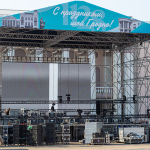
LED screen frameworks require precise alignment to prevent display distortion. Rectangular hollow sections provide stable mounting surfaces that hold screens flat. The rigid structure prevents sagging that would create visible lines in digital displays.
Gantry structures spanning highways use large rectangular hollow sections as primary beams. These support advertising panels while allowing vehicles to pass safely beneath. The hollow sections meet load calculations required for DOSH approval.
Street furniture advertising uses smaller hollow sections (50mm-80mm) for bus shelter frames, directional signage, and pole-mounted displays. The material withstands daily wear, vandalism attempts, and weather exposure better than alternative materials.
All outdoor advertising structures in Malaysia require engineering certification. Hollow section suppliers must provide material test certificates and compliance documentation for permit applications.
Why Are Industrial Racking Systems Built with Hollow Sections?
Warehouse racking systems in Malaysia support loads ranging from 1,000kg to 3,000kg per level using hollow section uprights and beams. The industrial storage sector depends on hollow sections for reliable, long-term performance.
Pallet racking uprights use rectangular hollow sections because they resist bending under vertical loads. The four-sided design provides connection points for horizontal beams without requiring complex welding. This modular approach allows warehouse managers to reconfigure layouts as storage needs change.
The hollow interior of racking components reduces overall system weight while maintaining load capacity. This matters for warehouse floors with weight restrictions. Heavy solid steel racking could exceed floor load limits, but hollow section systems stay within safe parameters.
Mezzanine floor supports use large hollow sections as columns. These create additional storage levels without requiring permanent building modifications. The hollow sections accept connections from multiple directions, simplifying mezzanine floor assembly.
Industrial racking must meet SIRIM safety standards. Hollow section suppliers provide load test certificates showing material meets required specifications. This documentation protects warehouse operators during safety inspections.
Power Metal & Steel supplies hollow sections suitable for racking applications, with material certifications meeting Malaysian industrial standards.
How Do Hollow Section Suppliers Support Malaysia’s Industries?
Reliable hollow section suppliers provide more than just steel products, they offer technical support, material certifications, and delivery logistics that keep projects on schedule.
Quality suppliers maintain inventory in common sizes, reducing lead times for standard projects. They stock square hollow sections from 40mm to 200mm, rectangular sections up to 300mm x 200mm, and circular sections in various diameters.
Technical assistance helps buyers specify the correct section size for their application. Suppliers calculate load requirements, recommend appropriate steel grades, and suggest coating options for specific environments.
Material certification documentation proves hollow sections meet Malaysian standards. Suppliers provide mill test certificates, dimension verification reports, and steel grade confirmations required for project approvals.
Custom cutting and fabrication services save contractors time and labor. Suppliers cut hollow sections to exact lengths, drill connection holes, and prepare end treatments before delivery. This speeds up on-site assembly.
Delivery coordination ensures materials arrive when needed. Suppliers manage logistics for projects across Malaysia, from Johor industrial zones to Penang agricultural areas to Kuala Lumpur construction sites.
Conclusion
Hollow section steel supports five critical Malaysian industries: construction, agriculture, oil & gas, outdoor advertising, and industrial storage. Each sector relies on the material’s strength-to-weight advantage, corrosion resistance, and modular design flexibility.
The hollow design provides structural efficiency that solid steel cannot match. Industries benefit from reduced material costs, faster installation, and long service life under Malaysia’s tropical conditions.
As Malaysia’s economy continues growing in 2026, demand for quality hollow section suppliers will increase. Industries need reliable partners who understand local requirements, provide proper certifications, and deliver materials on schedule.
Power Metal & Steel supplies hollow sections for construction, agriculture, industrial, and commercial applications across Johor Bahru, Kuala Lumpur, and Penang. We provide material certifications, technical support, and delivery services that help Malaysian industries build reliably.
Contact Power Metal & Steel for hollow section steel products meeting Malaysian standards. We serve construction contractors, agricultural developers, industrial facility managers, and commercial builders throughout Malaysia.
FAQs
Square hollow sections have equal side dimensions (e.g., 50mm x 50mm) and provide uniform strength in all directions, making them ideal for columns and posts. Rectangular hollow sections have unequal dimensions (e.g., 100mm x 50mm) and offer greater strength along the longer axis, which suits beams and frames where load direction is predictable. Both types share the same hollow interior design that reduces weight while maintaining structural integrity.
Hollow sections provide superior strength-to-weight ratio compared to solid steel bars of equivalent weight. A hollow section beam weighs 30-40% less than a solid steel beam with the same load-bearing capacity because the hollow design distributes stress more efficiently across the structure. However, for the same cross-sectional area, solid steel has higher absolute strength, the advantage of hollow sections lies in achieving required strength with significantly less material and weight.
Bare (black) hollow sections work well indoors where humidity is controlled, but outdoor applications require protective coatings to prevent rust. Hot-dip galvanizing is the standard treatment for outdoor use in Malaysia, providing 20-30 years of corrosion protection in tropical conditions. For specialized environments like chemical plants or coastal areas, powder coating over galvanized steel or stainless steel hollow sections may be necessary. Indoor applications in air-conditioned facilities can use bare steel with basic primer paint to save costs.
Yes, modular racking systems built from hollow sections are designed for future expansion without major structural changes. The bolt-together design allows you to add new bays by purchasing matching uprights and beams that connect to your existing framework. When planning expansion, ensure your warehouse floor can support the additional load and maintain adequate aisle spacing for forklift access. Most reputable hollow section suppliers maintain consistent product specifications, so racking components purchased years apart will still fit together properly.
Request mill test certificates (MTC) from your hollow section supplier showing the steel grade, dimensions, and mechanical properties match MS 1462 or equivalent international standards (EN 10219, ASTM A500). Verify that the supplier provides dimensional inspection reports confirming wall thickness, outer dimensions, and straightness meet tolerance requirements. For critical applications like construction or industrial racking, ensure the supplier has SIRIM certification or equivalent quality management system documentation proving consistent manufacturing standards.