Discover 3 key benefits of modular scaffolding for Malaysian high-rise builds, from faster setup to cost savings. Trusted by contractors in Penang, Johor & beyond.
Key Takeaways
✨ Modular scaffolding is built for adaptability, it works well on uneven terrain and complex building footprints common in Malaysian urban construction.
✨ Faster dismantle and erection reduces overall project timelines, helping contractors meet tight deadlines.
✨ The reusable nature of modular systems lowers long-term costs, components that are well-maintained can serve across multiple projects.
✨ Proper planning, trained workers, and using compliant equipment are the practical foundations of a safe scaffolding setup in Malaysia.
✨ Power Metal & Steel supplies scaffolding systems suited for high-rise and commercial construction across Johor, Penang, and beyond.
Introduction
Malaysia’s construction scene doesn’t slow down. From the high-rises reshaping Johor Bahru’s skyline to the ongoing commercial developments across George Town and the wider Penang development areas, contractors are under constant pressure to build faster, smarter, and safer all at the same time.
One quiet but significant shift in how that’s happening? The growing adoption of modular scaffolding systems.
Different scaffolding systems suit different jobs. For high-rise builds and multi-storey commercial projects, modular systems are increasingly becoming the go-to choice among contractors. Here’s why.
1. Handles Difficult Sites Without the Headaches
Malaysian construction sites are rarely flat and predictable. Penang’s older shophouse districts, hillside developments in Johor, and urban infill projects often mean working around sloped ground, tight lot boundaries, or irregular building profiles.
This is where modular scaffolding earns its keep.
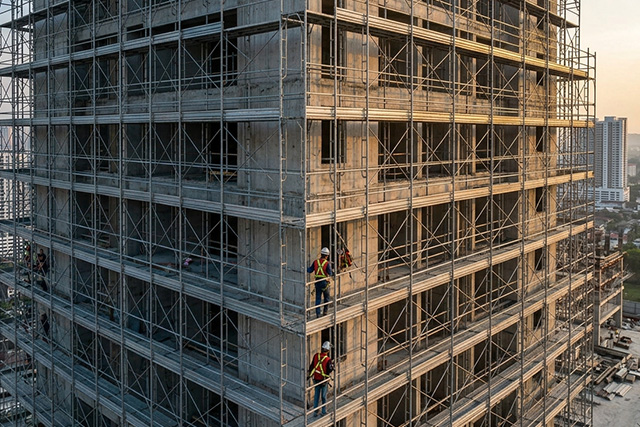
Modular scaffolding uses standardised components like frames, base plates, braces, and ledgers that are designed to connect in multiple configurations. Contractors can adjust the layout to match the actual site conditions rather than spending time on custom cutting or on-site improvisation.
The result? Less time figuring out workarounds on the ground, and more time actually getting work done. For projects with unusual shapes or phased construction where scaffolding needs to be partially repositioned, modular systems give site teams a practical advantage.
2. Faster Erection Means Real Time Savings
On a high-rise project, every floor added is another race against the clock. Scaffolding that takes too long to erect or requires experienced specialists at every stage adds real cost to a job.
Modular systems are engineered with speed in mind. The components are designed to slot, clip, or pin together in a logical sequence. Workers can be trained on the system and, with proper supervision in place, erect and dismantle sections efficiently as construction progresses upward.
For contractors managing multiple floors simultaneously, a common approach in Malaysia’s fast-moving high-rise market, this ability to quickly adapt scaffold height and coverage is a genuine operational edge.
It’s worth noting that in Malaysia, scaffolding work should always be carried out under appropriate supervision, with workers who have received proper training. This isn’t just good practice, it’s part of responsible site management that reduces the risk of accidents and delays caused by errors during installation.
In cities like Penang and Johor Bahru, where construction timelines are often tight and project handover dates are fixed, the time savings from a well-organised modular system can add up meaningfully across a project’s lifespan.
3. Reusability Makes Long-Term Cost Management Easier
This one often gets underestimated, especially by contractors who focus on upfront costs rather than total project spend.
Modular scaffolding components are built to be used, dismantled, and reused repeatedly. Because the system relies on standardised parts that connect without welding or custom fabrication, components that are properly maintained retain their usability across multiple projects.
For a scaffolding supplier relationship, this creates a practical loop: rental or purchase of modular components becomes a managed resource rather than a single-use expense. Contractors who work on multiple concurrent projects across Johor Bahru, Pasir Gudang, and Penang can rotate components between sites, as long as proper inspection is done between uses to confirm components are in good condition.
Damaged or structurally compromised components should always be removed from service. Reusability only delivers cost value when it doesn’t come at the expense of safety.
Getting It Right in Practice
Knowing the benefits is one thing. Putting them to work on an actual site requires the right groundwork:
- Plan the scaffold design before mobilisation. Knowing your site’s dimensions, load requirements, and access points in advance helps you order the right components and avoids costly adjustments mid-project.
- Use components from a reliable supplier. Scaffolding that looks similar isn’t always compatible across brands. Mixing non-matched components can compromise the stability of the entire structure.
- Ensure workers are trained. Even well-designed modular systems need people who understand how to assemble them correctly. Don’t skip the briefing.
- Inspect regularly throughout the project. High-rise builds run for weeks or months. Conditions change like weather, load shifts, ground movement. Regular checks keep the structure performing as intended.
Power Metal & Steel: Supplying Scaffolding Across Malaysia
At Power Metal & Steel, we supply scaffolding systems including modular and frame scaffolding options to construction contractors across Johor, Penang, and other parts of Malaysia. Our inventory includes both new and reconditioned scaffolding stock, giving contractors practical options that keep project costs manageable without cutting corners on quality. Whether you’re looking to rent or purchase, our team can help you identify the right system for your project’s requirements.
We’ve worked with clients on commercial builds, high-rise residential projects, and industrial construction. Our focus is straightforward: give contractors the right equipment, backed by reliable supply and honest advice.
If you’re planning a project and want to talk through your scaffolding needs, get in touch with us.
FAQs
Modular scaffolding is a system built from standardised, pre-engineered components such as frames, ledgers, base plates, and braces that are designed to connect to each other in a fixed, repeatable way without requiring custom cutting or loose fittings on site. This distinguishes it from tube-and-coupler systems, where individual pipes and clamps are assembled more freely but require more manual adjustment and tightening. The key advantage of modular scaffolding is that its connections are consistent and predictable, which makes assembly faster and reduces the margin for installation error.
Modular scaffolding is not limited to high-rise construction, it is equally practical for low-rise commercial buildings, shophouse renovations, industrial facilities, and residential projects that require access at height. The system’s adaptability means it can be scaled up or down depending on the scope of the job. For smaller projects, the speed and ease of assembly often make modular systems a cost-effective choice even if only a few bays are needed.
Yes, renting is a common and practical option, particularly for contractors who need scaffolding for a specific project duration rather than on a permanent basis. Renting eliminates the cost of long-term storage, maintenance, and component replacement, and allows you to match the quantity of scaffolding precisely to each job. Power Metal & Steel offers scaffolding rental services in Malaysia, with both new and reconditioned stock available to suit different project budgets and requirements.
The main factors to consider are the height and load requirements of your project, the site conditions (including ground levelness and available footprint), and the duration of the build. For heavy-duty applications such as supporting concrete pours on high-rise structures, a system with higher load capacity such as a shoring-type modular system may be more appropriate than a standard frame system. If you are unsure, consulting a scaffolding supplier such as Power Metal & Steel before mobilisation is a practical first step, a reliable supplier can help match the system type to your actual site needs.
Modular scaffolding has seen growing adoption across Malaysia’s construction sector, particularly on commercial, industrial, and high-rise projects where speed, safety, and repeatability are priorities. The push for better site safety standards and more efficient project delivery has made system scaffolding, which includes modular types, an increasingly preferred choice among contractors and developers. While no single scaffolding type is mandated for all projects, the practical advantages of modular systems, combined with the availability of rental options from local suppliers, have made them a mainstream rather than specialist choice for many Malaysian construction teams.