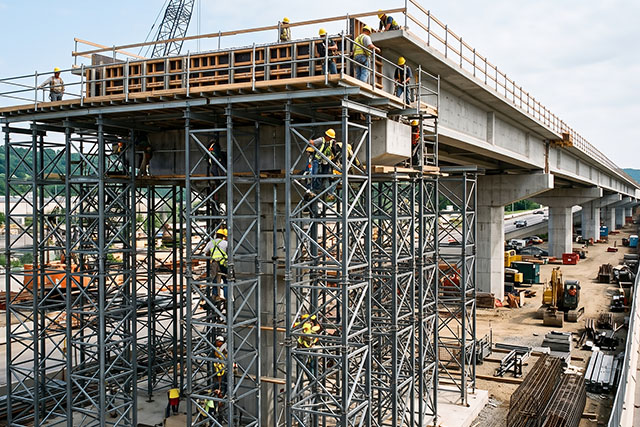
Malaysia’s high-rise and infrastructure pipeline is growing. See where the C60 shoring system fits into these heavy-load projects, and how Power Metal & Steel can help.
Key Takeaways
✨ Malaysia’s construction pipeline continues to be shaped by high-rise residential and commercial developments, large transportation infrastructure, and integrated mixed-use projects.
✨ These project types share a common structural demand: the need for temporary support strong enough to carry heavy concrete loads safely during construction.
✨ The C60 shoring system is built specifically for this kind of heavy-duty support, making it a practical fit across high-rise, infrastructure, and mixed-use construction.
✨ Choosing the right shoring approach for a project depends on load requirements, building or structure layout, and the construction sequence being followed.
✨ Power Metal & Steel supplies C60 shoring systems and other scaffolding products to contractors working across Johor, Penang, Kuala Lumpur, and other parts of Malaysia.
Introduction
Drive through Kuala Lumpur, Johor Bahru, or Penang today and you will see a familiar pattern repeating itself. Tall residential towers rising next to commercial podiums. Elevated highway sections taking shape across new corridors. Mixed-use developments combining retail, offices, and homes within a single integrated footprint. Malaysia’s construction landscape continues to lean heavily into large-scale, vertically ambitious, and structurally complex projects.
Behind all of this visible progress sits a less visible but equally important question: how do you safely support a structure while it is still being built. For many of these projects, the answer involves the C60 shoring system.
What Today’s High-Rise and Infrastructure Projects Have in Common
High-rise buildings, transportation infrastructure, and mixed-use developments look very different from the outside, but they share structural demands that matter a great deal during construction.
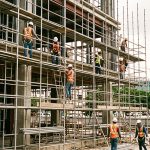
High-rise developments require floor after floor of concrete slabs and beams to be cast and cured before the structure becomes self-supporting. Each level depends on temporary support strong enough to carry its own weight, plus the load of formwork, materials, and workers, until the concrete reaches sufficient strength.
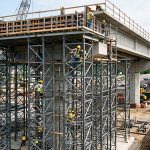
Transportation infrastructure, including highway flyovers and elevated rail sections, often involves casting large concrete spans at height, sometimes over roads or waterways that remain in use during construction. The temporary support here needs to manage substantial loads while also fitting within the geometry of the structure being built.
Mixed-use developments bring their own complexity because a single project might combine a multi-storey car park, a retail podium, and a residential tower, each with different floor heights, spans, and load requirements within the same site.
Across all three, the underlying need is the same: a temporary support system capable of carrying heavy loads safely and predictably until the permanent structure can stand on its own.
Where the C60 Shoring System Fits In
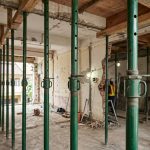
The C60 shoring system is designed around exactly this kind of demand. Built using heavy duty steel tubing, the system forms a grid of vertical supports and horizontal connections that distributes weight evenly across a structure during the concrete casting and curing process.
What makes it suited to high-rise, infrastructure, and mixed-use work in particular is its combination of strength and adaptability. The system can be configured to handle the heavier loads typical of multi-storey concrete pours, while also being adjusted to fit irregular layouts, varying floor heights, and the kind of custom formwork shapes that often appear in modern mixed-use designs.
On a high-rise project, this might mean supporting a wide concrete slab across an open floor plate. On an infrastructure project, it might mean supporting an elevated deck section above a busy road. On a mixed-use development, it could mean adapting to several different structural conditions within the same site as the project moves from one component to the next.
In each case, the system’s components connect directly without requiring separate couplers or fittings, which allows crews to assemble and reposition the structure efficiently as the project progresses through different pours and phases.
Why Getting Shoring Right Matters More on These Projects
On a smaller or simpler build, shoring decisions tend to be relatively straightforward. On high-rise, infrastructure, and mixed-use projects, the stakes are considerably higher.
A shoring failure during a concrete pour does not just affect that one element. It can compromise the safety of workers on site, damage formwork and partially set concrete, and cause significant delays to a project schedule that is often already tightly sequenced across multiple trades and phases.
This is why shoring planning on these projects typically involves close coordination between the structural engineer, the main contractor, and the shoring supplier. Load calculations, formwork design, and the sequence of pours all need to be considered together rather than treated as separate decisions made in isolation.
Choosing a shoring system with a proven heavy-load track record, like the C60 system, gives project teams a more predictable foundation to build that planning around.
Practical Considerations for Contractors
A few points are worth keeping in mind when planning to use the C60 shoring system on a high-rise, infrastructure, or mixed-use project.
Match the system to the actual load. Every pour has different load requirements depending on slab thickness, span, and the materials involved. Working with your shoring supplier to confirm the right configuration before mobilisation avoids costly adjustments later.
Plan for sequencing. On multi-phase projects, shoring often needs to be struck in one area while still standing in another. Mapping this out in advance keeps the project moving without unnecessary downtime.
Inspect regularly. Components used across multiple pours or phases should be checked for wear, corrosion, or damage before each reuse, particularly on long-running projects where the same shoring equipment may be in service for an extended period.
Work with an experienced supplier. A supplier familiar with heavy-load projects can help with system selection and quantity planning from an early stage, reducing the risk of mismatched equipment once the project is underway.
Power Metal & Steel: C60 Shoring and Scaffolding Supply Across Malaysia
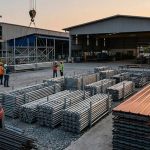
At Power Metal & Steel, we supply C60 shoring systems and other scaffolding products to contractors working on high-rise, infrastructure, and mixed-use projects across Johor Bahru, Penang, Kuala Lumpur, and other parts of Malaysia. Our inventory includes both new and reconditioned stock, giving contractors options that suit different project scales and budgets.
As Malaysia’s construction pipeline continues to grow across these project types, having a reliable shoring partner who understands the demands of heavy-load construction makes a real difference to how smoothly a project runs.
If you are planning a project that requires C60 shoring or other scaffolding solutions, get in touch with our team to discuss your requirements.
FAQs
In construction, “heavy duty” refers to a system’s ability to safely carry substantial loads, such as the weight of thick concrete slabs, beams, or multiple structural layers during casting and curing. A heavy duty shoring system like C60 is built with thicker steel components specifically designed to handle these higher loads compared to lighter access scaffolding used mainly for worker access rather than structural support.
The C60 shoring system is primarily used to support structures during concrete casting and curing, which is its main and most common application on construction sites. While its modular components share some similarities with general heavy duty support structures, its core purpose remains providing temporary load-bearing support rather than functioning as standard access scaffolding for working at height.
Determining shoring requirements typically involves the project’s structural engineer, who calculates the loads based on slab thickness, span, and pour sequence, working alongside the main contractor and shoring supplier. The supplier can then advise on the appropriate C60 configuration and quantities to meet those calculated requirements safely and efficiently.
Yes, this is one of the practical advantages of the C60 system, as its modular components can be adjusted in height and configuration to suit different structural conditions within the same project. This allows the same shoring system to be reconfigured as work moves between different parts of a mixed-use development, such as a car park, podium, and tower, without needing entirely different equipment for each.
Yes, reusability is one of the practical benefits of the C60 system, as its components are designed to be assembled, dismantled, and reassembled across multiple pours or project phases. Components should be inspected for wear, corrosion, or damage before each reuse, particularly on infrastructure projects where the same equipment may remain in active service over an extended period.