Modern construction in Malaysia needs flexible scaffolding. Learn how modular scaffolding meets the demands of high-rise and prefab projects, and falsework applications.
Key Takeaways
✨ Construction Is Changing Fast: Malaysia’s construction market is growing 8.66% yearly, with new high-rise towers and prefab buildings requiring different scaffolding approaches.
✨ Falsework Must Use Modular Systems: Malaysian regulations prohibit prefabricated steel frame scaffolding from being used as falsework, modular systems designed for load-bearing applications are now mandatory.
✨ Prefab Buildings Need Quick Setup: Modular construction methods that finish buildings 40% faster need scaffolding that can keep up with rapid timelines.
✨ High-Rise Projects Have Strict Rules: Buildings over 40 meters need Professional Engineer approval for scaffolding, making modular systems the safer choice.
✨ Rental Makes More Sense: With project types changing constantly, renting modular scaffolding from Power Metal & Steel gives you the right equipment for each job.
Introduction
Malaysia’s construction industry is transforming. Walk through Kuala Lumpur, Penang, or Johor Bahru today and you will see something different from ten years ago.
High-rise residential towers are shooting up faster than ever. Mixed-use developments combine offices, shops, and apartments in single complexes. Prefabricated building methods are replacing traditional brick-by-brick construction.
These changes create new challenges for contractors. The old scaffolding approaches do not work anymore. If you are managing a modern construction project, you need scaffolding that adapts to these new building methods.
This guide explains how Malaysia’s construction trends are shaping scaffolding requirements and how modular scaffolding rental solves these challenges.
What Construction Trends Are Shaping Malaysia in 2026?
Malaysia’s construction market is growing at 8.66% yearly driven by three major trends: high-rise residential development, prefabricated construction methods, and complex structural projects requiring falsework support.
The government’s Rumah Mampu Milik Wilayah program targets 150,000 affordable housing units priced under RM280,000. Developers are using modular construction to cut delivery time to 18 months instead of 30 months for traditional builds.
In Kuala Lumpur and the Klang Valley, high-rise projects dominate. The city already has buildings like The Exchange 106 at 453.6 meters tall. More towers are being planned as urban land becomes scarce.
Prefabricated building methods are growing rapidly. Contractors now use industrialized building systems (IBS) to meet the government’s target of 70% penetration in public projects. These methods involve building sections off-site in factories, then assembling them on location.
Why Does Falsework Require Modular Systems in Malaysia?
All falsework applications in Malaysia must use modular systems specifically designed for load-bearing, prefabricated steel frame scaffolding is prohibited for falsework use. This regulation has been enforced by CIDB since 2021.
Falsework supports permanent structures while they are being built and cannot support themselves yet. Concrete slabs, beams, and columns need temporary support during curing. This load-bearing function is completely different from access scaffolding that only supports workers and light materials.
The regulation exists because steel frame scaffolding designed for worker access cannot safely handle the extreme loads from wet concrete. A typical concrete slab can exert massive weight during pouring. Steel frame scaffolding is rated for worker access loads only, which is completely inadequate for concrete support.
Modular falsework systems are engineered specifically for these heavy loads. Each component has certified load capacity ratings. The systems include adjustable props, load-bearing towers, and horizontal beams designed to distribute concrete weight safely across multiple support points.
For contractors, this means you cannot simply use your access scaffolding for concrete work. CIDB inspectors specifically check for this violation. Using steel frame scaffolding as falsework can result in project shutdown, fines, and potential criminal charges if structural failure occurs.
Power Metal & Steel provides modular falsework systems that comply with Malaysian regulations. Our systems include proper engineering certifications and load capacity documentation required for CIDB and DOSH inspections.
Pro Tip: Always request compliance certification from your falsework supplier. This protects you during CIDB inspections and ensures you meet Malaysian standards for load-bearing temporary works.
Why Do High-Rise Projects Need Engineered Scaffolding Systems?
High-rise buildings over 40 meters require Professional Engineer approval for scaffolding systems in Malaysia. This is because working at height creates specific safety and structural challenges that low-rise projects do not face.
Traditional scaffolding struggles with tall buildings for several reasons. Wind loads increase dramatically above 40 meters. The weight of scaffolding materials becomes difficult to manage. Assembly time slows down project schedules when you need to build scaffolding to extreme heights.
Modular scaffolding systems in Malaysia solve these problems through engineered design. Each component is pre-tested for load capacity. The modular pieces lock together securely, creating stable structures at any height.
For contractors working on high-rise projects, this means several benefits. Setup time drops by 30-40% compared to traditional tube-and-coupler systems. Safety improves because modular components are standardized and inspected. Professional Engineers can approve designs faster because modular systems have predictable load calculations.
DOSH regulations require scaffolding above 4 meters to meet strict safety standards. Modular systems make compliance easier because they are designed to meet MS 1462 standards from the factory.
Pro Tip: Always request Professional Engineer certification for scaffolding on buildings over 40 meters. This protects you during DOSH inspections and reduces liability if accidents occur.
How Does Prefab Construction Change Scaffolding Requirements?
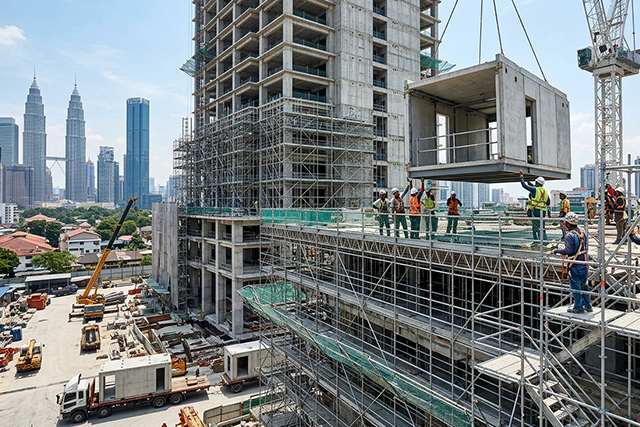
Prefabricated construction methods reduce on-site work time to 7-10 days per floor in high-rise projects. This speed creates a timing problem: traditional scaffolding takes too long to erect and adjust.
Prefab buildings work differently from traditional construction. Factory-made building sections arrive on trucks ready to install. Cranes lift these modules into place within hours. The construction schedule moves fast because most work happens off-site.
Traditional scaffolding cannot keep up. Setting up tube-and-coupler scaffolding takes days. If the scaffolding delays module installation, the entire project schedule suffers. This costs money and frustrates clients.
Modular scaffolding rental service matches prefab construction speed. The system sets up in hours instead of days. Components are standardized, so crews need minimal training. When the building section is complete, scaffolding disassembles quickly and moves to the next location.
For contractors managing prefab projects, this flexibility is critical. You can erect scaffolding exactly when needed, not weeks in advance. Storage space on-site stays minimal because components arrive just-in-time. Project timelines stay on track.
What Makes Complex Building Structures Suitable for Modular Scaffolding?
Modern construction projects often feature complex architectural designs with irregular shapes, varying floor heights, and multiple structural zones. Each section needs scaffolding that adapts to different access requirements.
A typical large-scale project might have retail spaces with high ceilings, office floors with standard heights, and residential areas with compact layouts. Each zone presents different challenges for scaffolding installation and worker access.
Both modular and tubular scaffolding systems can handle complex configurations. However, modular systems offer specific advantages for projects with tight schedules and changing requirements.
Modular scaffolding excels when speed and reconfiguration matter. The same components work for different ceiling heights and building zones. You can reconfigure the system without ordering new materials. This saves money and keeps the project moving.
For contractors, this means fewer equipment changes throughout the project. High-rise modular systems for tall sections. Quick-setup configurations for fast-moving areas. The rental contract covers the entire project without needing different scaffolding types for each building zone.
Tubular scaffolding remains valuable for projects requiring custom configurations around unusual building features or where maximum flexibility outweighs setup time considerations. The choice between modular and tubular depends on your specific project timeline, crew skill level, and structural complexity.
Why Is Scaffolding Rental Better Than Buying for Modern Projects?
Malaysia’s construction projects are changing rapidly, requiring different scaffolding solutions for each job type. Renting scaffolding gives contractors flexibility without the burden of ownership. Modern construction demands adaptability. One month you might work on a high-rise residential tower. The next month brings a mixed-use commercial project. The following month could be a prefab industrial building. Each project needs different scaffolding configurations.
When you rent from Power Metal & Steel, you get exactly the equipment your current project needs. High-rise modular systems for tall buildings. Quick-setup frame scaffolding for fast-moving prefab projects. Flexible tubular systems for custom configurations.
Storage and maintenance costs disappear with rental. You do not need warehouse space for scaffolding inventory. You do not spend time on inspections and repairs. You do not worry about equipment sitting idle between projects.
Rental includes professional support. Our team visits your site, evaluates requirements, and recommends the right scaffolding configuration. We handle delivery and pickup when projects finish.
How Does Power Metal & Steel Support Modern Construction Projects?
We provide modular scaffolding rental services across Johor Bahru, Kuala Lumpur, and Penang with equipment that meets MS 1462 standards. Our inventory supports high-rise, prefab, and falsework applications throughout Malaysia.
Our modular scaffolding systems are designed for the construction trends shaping Malaysia in 2026. Fast setup times match prefab construction schedules. Professional Engineer documentation supports high-rise approvals. Compliant falsework systems meet CIDB requirements for load-bearing applications.
Every rental includes site consultation. We visit your project location, review architectural plans, and recommend scaffolding configurations. This ensures you get equipment that matches your specific requirements, not generic solutions.
We stock frame scaffolding, tubular systems, and specialized modular components. This variety means one supplier handles all your scaffolding needs regardless of project type. You save time managing vendors and negotiating contracts.
Our team understands Malaysian construction regulations. We provide CIDB-certified scaffolding and maintain DOSH compliance documentation. This reduces your administrative burden during inspections and audits.
Conclusion
Malaysia’s construction industry is evolving rapidly. High-rise towers, prefabricated buildings, and structures requiring falsework support are becoming the standard, not the exception.
These modern construction methods need scaffolding that adapts quickly, sets up efficiently, and meets strict safety standards. Modular scaffolding systems provide this flexibility while keeping costs predictable through rental models.
Malaysian regulations now require modular systems for all falsework applications. This protects workers and ensures structural stability during concrete curing. Contractors must comply with these standards or risk project shutdown and penalties.
If you are managing a construction project in 2026, evaluate your scaffolding approach. Traditional methods might slow your schedule and increase costs. Modular scaffolding rental from Power Metal & Steel gives you the right equipment for modern construction demands.
Contact Power Metal & Steel for scaffolding rental services in Johor Bahru, Kuala Lumpur, and Penang. We provide modular scaffolding solutions for high-rise, prefab, and falsework applications with Professional Engineer support and DOSH-compliant equipment.
FAQs
Modular scaffolding uses pre-engineered components that lock together with standardized connections, allowing faster assembly and configuration changes. Traditional tube-and-coupler scaffolding requires manual fitting of individual pipes with clamps, which takes longer to install and adjust. Modular systems are designed for quick setup (hours instead of days) and are ideal for projects with tight timelines like prefab construction or high-rise buildings.
High-rise residential towers, prefabricated buildings, and any project requiring falsework for concrete support benefit most from modular scaffolding. Projects using industrialized building systems (IBS) need scaffolding that matches their fast construction pace. Buildings over 40 meters that require Professional Engineer approval also benefit because modular systems have predictable, documented load calculations that engineers can certify faster. Additionally, all falsework applications legally require modular systems under Malaysian regulations.
Yes, modular scaffolding systems are engineered to support heavy loads required for both prefab construction and concrete falsework. Each component has certified load capacity ratings, and the system can be configured to distribute weight safely across multiple support points. The standardized design makes it easy to calculate total load capacity and ensure you meet safety requirements for heavy prefab modules, wet concrete, construction materials, and worker access. Falsework-specific modular systems are tested and certified for load-bearing applications.
Yes, Malaysian regulations require Professional Engineer (P.E.) approval for all scaffolding systems on buildings exceeding 40 meters height, regardless of scaffolding type. However, modular systems make the approval process faster because they have standardized engineering calculations and pre-certified load capacities. Contractors should request P.E. certification documentation as part of their rental agreement for high-rise projects.
Renting is generally more practical for contractors handling diverse project types in Malaysia’s evolving construction market. Each project (high-rise, prefab, falsework) needs different scaffolding configurations, and rental ensures you get the right equipment for each job without maintaining multiple system inventories. Rental eliminates storage costs, ongoing maintenance requirements, and the financial burden of equipment sitting idle between projects while still providing access to the latest certified systems that comply with current regulations.